About HDPE Sprinkler Pipe Fitting
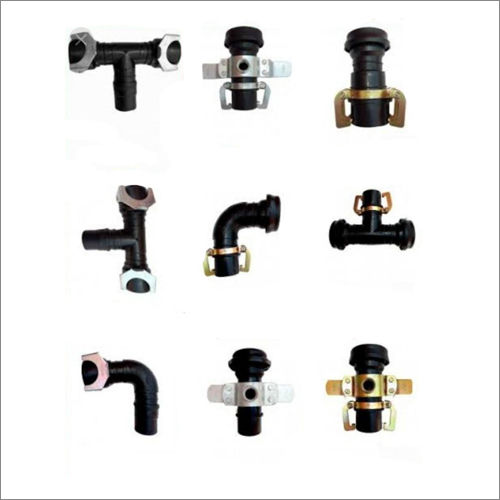
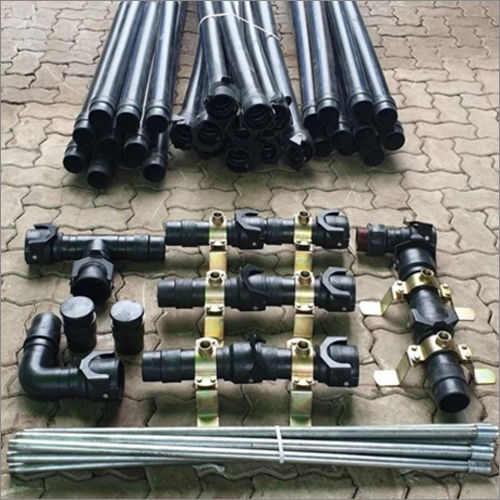
We are offering HDPE sprinkler pipe fittings that are components used to connect HDPE sprinkler pipes in an irrigation system. These fittings are designed to withstand high pressure & are available in various sizes, shapes, and configurations, including couplers, elbows, tees, reducers, as well as end caps. They are made of durable & corrosion-resistant HDPE material, ensuring long-term performance as well as minimal maintenance. HDPE sprinkler pipe fittings can be easily installed using fusion, electrofusion, or mechanical methods, ensuring a tight and leak-free connection. Proper selection and installation of HDPE sprinkler pipe fittings are crucial for efficient and reliable irrigation systems.
Enhanced Durability & Chemical ResistanceThese HDPE sprinkler pipe fittings are crafted to withstand exposure to harsh chemicals such as acids, alkalis, and salts. Their corrosion-resistant properties, combined with UV stabilization, make them an excellent choice for outdoor and underground applications. The fittings retain their structural integrity under a variety of demanding conditions, ensuring long-term reliability for irrigation systems.
Flexible Installation OptionsDesigned for above ground and underground use, the fittings support various joint and end types, including plain, threaded, and flanged connections. With easy fusion welded or mechanical joint assembly, installation is quick and straightforward. The wide diameter and length choices allow for customization according to specific agricultural or irrigation needs.
Compliance & Safety AssuranceThe fittings conform to the IS 14151 (Part 2): 2008 standard, guaranteeing quality and safety. Each unit undergoes hydrostatic testing at up to 1.5 times working pressure, ensuring leak-proof and reliable connections. Additionally, the lightweight design simplifies handling and logistics, further contributing to installation safety and efficiency.
FAQs of HDPE Sprinkler Pipe Fitting:
Q: How are HDPE sprinkler pipe fittings installed in agricultural irrigation systems?
A: HDPE sprinkler pipe fittings can be installed using fusion welded, mechanical joint, push fit, compression, or coupling methods. The installation process is quick and easy, suitable for both above ground and underground applications, and does not require specialized equipment.
Q: What is the benefit of using UV stabilized, corrosion-resistant fittings for sprinkler systems?
A: The UV stabilization and corrosion resistance protect the fittings from environmental degradation, ensuring a longer service life even when installed outdoors or in chemically aggressive environments typical of agricultural applications.
Q: When should I use threaded or flanged end types instead of plain ends?
A: Threaded or flanged end types are ideal when you need detachable connections for maintenance or future system extensions, whereas plain ends are suitable for permanent joints, especially when fusion welding is preferred.
Q: What fluids can be safely transported through these HDPE fittings?
A: These fittings are specifically designed for water conveyance and are recommended for agricultural irrigation and sprinkler systems, owing to their excellent chemical resistance and leak proof design.
Q: Where can HDPE sprinkler pipe fittings be used?
A: They are suitable for installation in both above ground and underground settings, commonly found in agricultural fields, greenhouses, gardens, and anywhere efficient water distribution for irrigation or sprinkler systems is required.
Q: What maintenance is required for these fittings over their lifespan?
A: With proper installation, the maintenance needs are minimal due to their resistance to corrosion, chemicals, and UV light. Periodic visual inspection is suggested to ensure continued leak-proof performance over the 1015 years life span.
Q: What is the testing process for the hydrostatic pressure of these fittings?
A: Each fitting is hydrostatically tested up to 1.5 times its working pressure to verify its integrity and ensure leak proof operation in real-world conditions, as per IS 14151 (Part 2): 2008 standards.







 Get Latest Price

 Send Inquiry